~~~ The Prophecy Chronicles ~~~
|
|
Click Here for an introduction on the meaning of prophetic symbols.
|
|
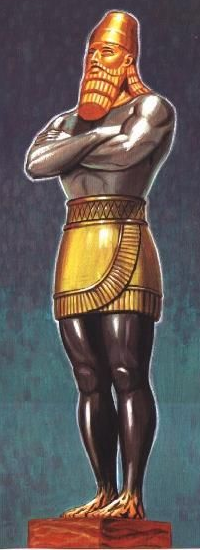
Nebuchadnezzar's Statue: Daniel 2:31-33
- Nebuchadnezzar saw in a dream "an enormous, dazzling statue." However, upon awakening the dream had left him. He asked his astrologers to tell him the dream and interpret it but they could not.
- Daniel interprets the dream:
|
|
|
|
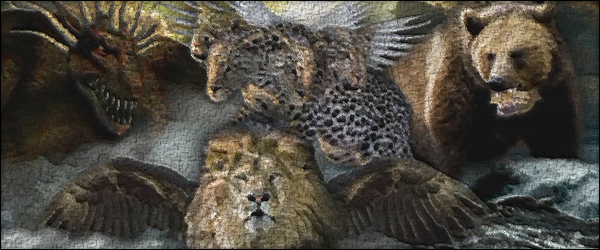
Daniel's Dream of Four Beasts: Daniel 7:1-11
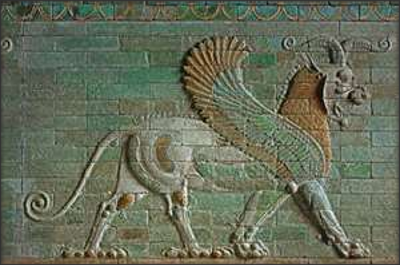
- Lion - Neo- Babylonian Empire (626 - 539 BC)
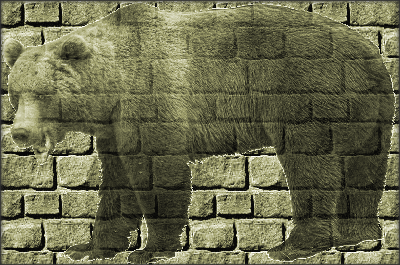
- Bear - Medo-Persian Empire (550 - 330 BC)
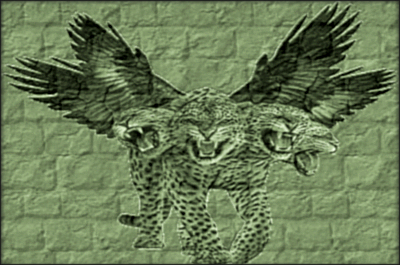
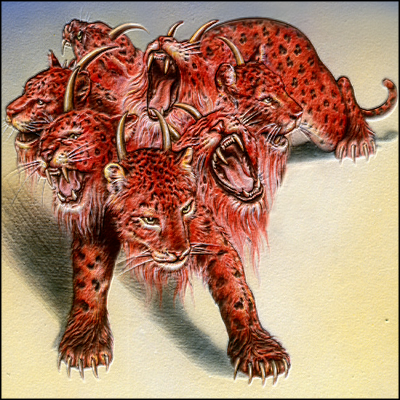
- Leopard- Greek Empire (330 - 30 BC)
- Non-descript Beast - Roman Empire (30 BC to 476 AD)
- Ten horns - The kingdoms of Europe after the fall of the Western Roman Empire.
- The little horn:
- It comes up from among the ten on the fourth beast (Rome), uprooting three horns that were before it.
- It had eyes like a human being and a mouth that spoke boastfully.
- He speaks blasphemies against the Most High and oppresses his holy people.
- The holy people will be delivered into his hands for a time, times and half a time.
- Heavenly judgment is pronounced, the beast is destroyed, and the earth becomes the everlasting kingdom of God.
|
|
|
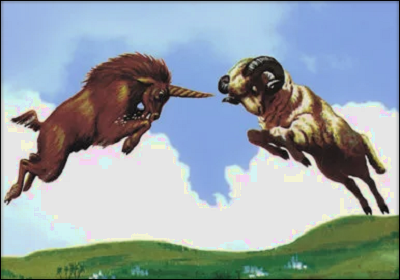
Daniel's Vision of a Ram and a Goat: Daniel 8:1-25
- The two-horned ram represents the kingdoms of Media and Persia.
- The goat is the kingdom of Greece.
- The large horn between its eyes is its first king, Alexander the Great.
- At the height of his power the large horn is broken off. This is symbolic of Alexander's untimely death.
- In its place four horns appear toward the four winds of heaven.
- They represent the divisions of the Greek Empire by four of Alexander's generals.
- Antigonus - Asia Minor.
- Cassander - Greece.
- Ptolemy - Egypt.
- Seleucus - Southwest Asia.
|
Another Little Horn:
- Out of one of the four horns another grows, small at first but grew in power.
- It reached the host of the heavens, and threw some of the starry host down to the earth.
- It magnified itself equal with the commander of the army of the Lord.
- It took away the daily sacrifice from the Lord, and his sanctuary was thrown down.
- It prospered in everything it did, and truth was thrown to the ground.
- He will cause deceit to prosper, and consider himself superior.
- He will take his stand against the Prince of princes, yet he will be destroyed, but not by human power.
*The little horn is the Roman Empire that succeeds the Medo-Persian and Greek Empires. Its history would appear to encompass many centuries.
~~~~~~~
*Its actions connect it with the little horn on Daniel's fourth beast, the first beast of Revelation 13 and the scarlet beast of Revelation 17. They are all one and the same entity.
|
The Red Dragon: Revelation chapter 12
- The dragon, also called the ancient serpent, is "the devil, or Satan who leads the whole world astray." Revelation 12:9
- The dragon has seven heads, ten horns and seven crowns on its heads. This description also connects the dragon with the first beast of Revelation 13 and the scarlet beast of Revelation 17.
- The seven heads bear crowns so these are symbolic of seven kings or kingdoms under his dominion which have been or will be enemies of God's people.
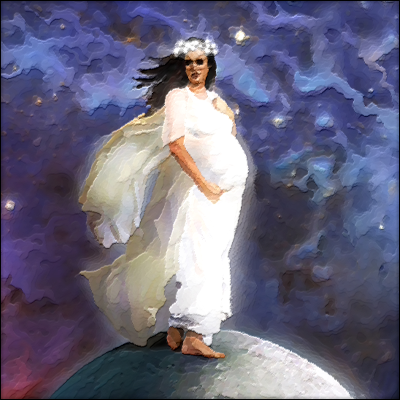
- The dragon is mentioned in connection with the symbolic depiction of a pregnant woman about to give birth and his attempt to destroy the child. Revelation 12:1-4
- The dragon's motive for this attack is because he knows the Messiah would bring about the end of his dominion on earth.
- The woman clothed with the sun, standing on the moon, and having a crown of twelve stars connects her with Israel. Genesis 37:9-10
- What the woman gives birth to is not Jesus, the son of Mary, but the promise of a savior in fulfillment of Scripture. Genesis 3:15
- This promise is delivered through the calling of Abraham from whose line would come the Messiah. Genesis 22:18
- Having failed in this attempt, the dragon then pursues the woman but she is given refuge from his attacks.
- Enraged, the dragon went off to wage war against the rest of her offspring. Thus begins a long history of the dragon using nations hostile to Israel to prevent the promised arrival of the Messiah. Revelation 12:12
- It is quite evident these texts cannot be applied to Mary, but a deeper symbolic reference to spiritual Israel through which God would fulfill the promise of a savior.
|
|
|
|
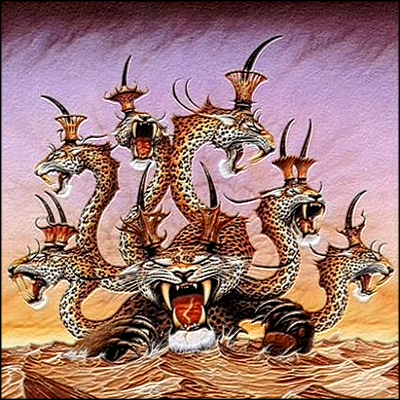
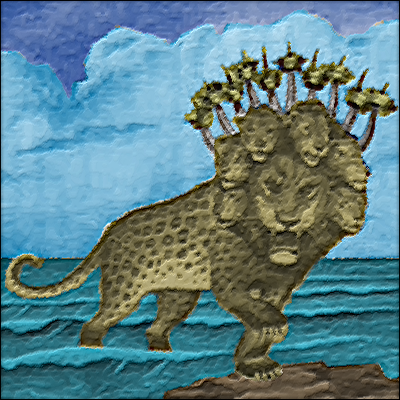
The Beast from the Sea: Revelation chapter 13
- The sea from which it arises symbolizes the populous region around the Mediterranean from which arise the great civilizations and empires of the ancient world.
- The seven heads symbolize seven historical enemies of Israel, the first six of which are: Egypt, Assyria, Babylonia, Medo-Persia, Greece, and Rome. The seventh head foretells the future end-time reappearance of the beast.
- It has ten horns, the same as Daniel's fourth beast, the red dragon, and the scarlet beast. This identifies all of them with Rome.
- Which head had the fatal wound? Of the scarlet beast the angel says, "The beast once was, now is not, and yet will come." Revelation 17:8
- And of the heads on the scarlet beast the angel says, "Five have fallen (passed into history), one is, the other has not yet come." Revelation 17:10
- This clearly identifies the Roman Empire as the sixth head which received the fatal wound at one point in its history. It could be said that Rome ceased to be the beast when it converted to Christianity in the fourth century AD.
- However the prophecy doesn't end there. The beast "yet will come" says the angel, indicating its return at some point in time.
- The forty-two months which the beast is given is the same as 1260 days, and time, times and half a time. All of these come to 3 & 1/2 years in literal time or 1260 years in prophetic time.
|
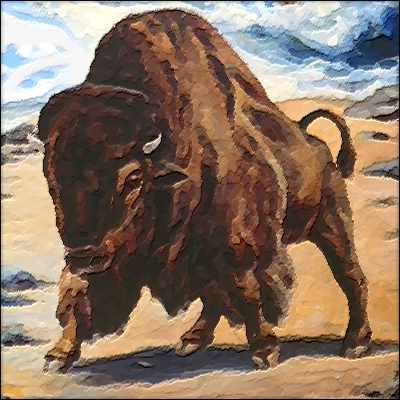
The Beast from the Earth: Revelation chapter 13
- Arising from the earth may indicate that this beast originates in a different part of the world.
- Having horns like a lamb but speaking like a dragon likens this beast to a deceiver, a wolf in sheep's clothing.
- This beast is further identified as the false prophet. "But the beast was captured, and with it the false prophet who had performed the signs on its behalf." Revelation 19:20
- Setting up of an image of the first beast symbolizes the introduction of idolatry in the worship of the first beast.
- Giving this image breath so it can speak signifies that it is not like idols made of stone or wood. It could be a separate agency created to work on behalf of the two-horned beast.
- The image demanding worship of itself on pain of death is akin to how idol worshiping people in ages past would show devotion to their gods.
- The mark of the beast signifies subservience (or loyalty) to the first beast by thought or deed.
- The mark is the numerical value of the name of the first beast and is "the number of a man." Revelation 13:18
- Since the first beast represents more than any one individual, it is suggested this number may apply to a specific title belonging to it.
|
|
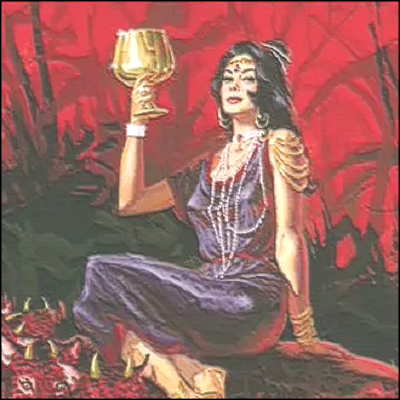
Babylon and the Scarlet Beast: Revelation chapter 17
- The mystery about her name may be that she identifies with the same system of beliefs and practices as ancient Babylon.
- She is shown seated on the scarlet beast, the civil powers, suggesting she exercises influence over it, symbolized as an adulterous relationship. Revelation 17:2
- She is guilty of the death of God's holy people and those who bear witness to the truth that is in Jesus.
- She is symbolic of a global system throughout history that stands in opposition to the law of God, the deception of worldliness, and the controlling influence of the world's civil governments.
- The angel tells john, "the beast once was, now is not, and yet will come", and the whole world will be astonished. Revelation 17:8
- The seven heads on the scarlet beast represent seven hills which also connects the woman with Rome, the city built on seven hills.
- The scarlet beast symbol with its seven heads and ten horns represent the powerful empires that became the enemies of God's people throughout history.
- The apostle John lived during the time of the Roman Empire, which identifies it with the one that is, or the sixth head on the beast.
- The ten horns on the scarlet beast that bear no crowns represent the divisions after the fall of the Western Roman Empire.
- The scarlet beast that "yet will come", in union with the ten horns when they have received their kingdom, turn on the woman and destroy her. Revelation 17:16
- The beast, together with the false prophet and the kings of earth are gathered to fight the army of heaven led by Him who is called "Faithful and True", but are defeated. Revelation 19:19-20
|
|
|